
We are specialists in ATEX and high technical specification environments
The Ingress Protection (IP) rating is a standard classification used in the lighting industry to describe the level of protection a luminaire provides against the ingress of solids and liquids.
Luminaires with an IP67 rating provide complete protection against dust and immersion in water for up to 30 minutes, with the luminaire submerged at a depth of between 15 cm and 1.5 metres.
IP67 and High Technical Specification Lighting luminaires
IP67 Protection
The IP rating is defined by the UNE/EN/IEC 60529 standard. This classification allows us to classify a luminaire according to its degree of protection against moisture and dust and helps us determine where it can be installed without posing any safety risk.
The first digit defines the level of protection against dust ingress, while the second defines protection against liquids. When we refer to IP6x ratings, it means that the luminaires are completely dust-tight. The second digit indicates the level of protection against liquid ingress, ranging from 0 (no protection) to 9 (protection against prolonged immersion in water).
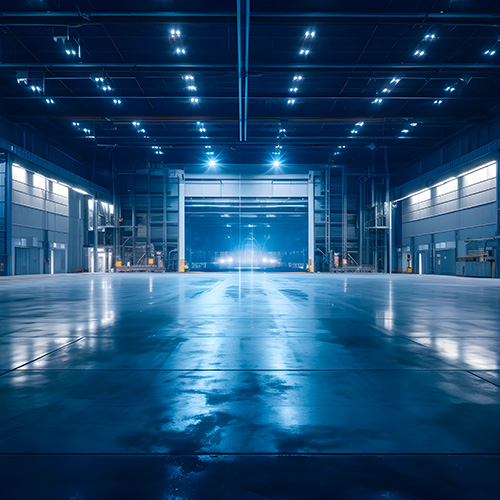

Some of the most common applications for these high technical specification luminaires are:
- Kitchens → In commercial kitchens (hotels, campsites, etc.) or any environment with high temperatures, luminaires must have a high IP rating to withstand harsh conditions caused by grease or steam.
- Outdoor areas → Luminaires used outdoors (parks, courtyards, façades, garages, etc.) may be exposed to adverse conditions. Therefore, a high IP rating is required to withstand environmental conditions such as rain and dust.
Frequently Asked Questions about IP67 Luminaires
The IP67 protection rating ensures that the device is completely dust-tight (rating 6) and provides protection against temporary immersion in water (rating 7).
IP67 luminaires offer a high level of protection against dust ingress and excellent resistance to temporary immersion in water, making them ideal for outdoor installations with occasional exposure to water, such as dam evacuation tunnels and wastewater treatment plants (WWTPs).
No, IP67 is designed to provide protection against temporary immersion, not for continuous underwater applications.